
Newsletter Subscribe
Enter your email address below and subscribe to our newsletter

All voices matter
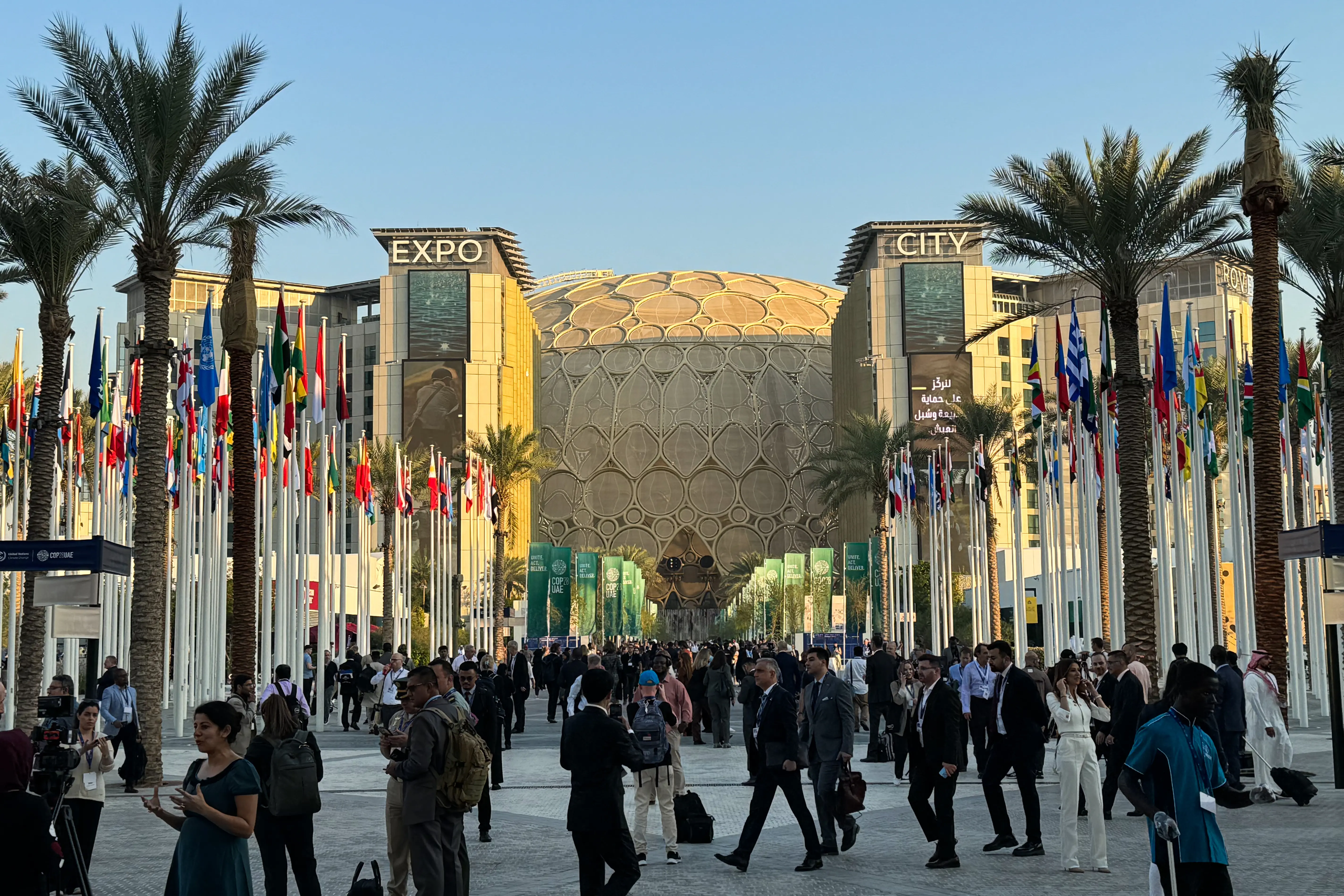

As Saudi Arabia moves past the midpoint of its Vision 2030 timeline, the question industry professionals are asking isn’t just “is the Saudi events market growing?” but “how does that growth actually compare to its closest Gulf rivals, the UAE and Qatar?” Planners and suppliers across the region now move between Riyadh, Dubai and Doha within the same working cycle, which makes a direct market-to-market comparison a practical planning tool rather than idle statistics.
According to estimates from Mordor Intelligence and Coherent Market Insights, the UAE leads the region with a MICE market valued at roughly $6.69 billion in 2026, followed by Saudi Arabia at approximately $3.54 billion, and Qatar at around $2.43 billion. Across the GCC as a whole, Mordor Intelligence estimated the events management industry at $78.25 billion in 2024, forecast to reach $120.73 billion by 2029.
The picture shifts when you look at forecast growth rates instead of absolute size. Qatar is projected to post the highest compound annual growth rate of the three at 11.6% between 2026 and 2033, followed by Saudi Arabia at 9.82% through 2031, then the UAE at 8.9% between 2026 and 2033.
Looking backward tells a slightly different story: in the hospitality segment tied directly to events, Saudi Arabia actually led the GCC in compound annual revenue growth for 2021-2026 at 8%, ahead of Kuwait (7.1%), Oman (6.3%), the UAE (5.5%), Qatar (4.3%), and Bahrain (2.9%). In other words, the Kingdom’s recent infrastructure investment is already showing up in the numbers — even before it overtakes the UAE in absolute market size.
Dubai, through both Dubai World Trade Centre (DWTC) and the Dubai Exhibition Centre at Expo City, has announced a packed events calendar running through the end of 2026, anchored by major shows including GITEX Global, Big 5, Beautyworld, Automechanika and Arabian Travel Market, spanning technology, construction, tourism, healthcare and energy.
Qatar, meanwhile, is preparing an expanded edition of the Qatar Event Show at the Doha Exhibition and Convention Center (DECC) from September 1-3, 2026, with an exhibition floor roughly 80% larger than its 2025 debut and an expected turnout of more than 5,000 delegates — alongside the launch of the country’s first dedicated events-industry awards. That’s a signal Doha is building out a domestic events supply chain, not just hosting international shows passing through. Qatar’s broader MICE infrastructure now includes more than 41,000 hotel rooms and over 15 major venues, led by DECC and the Qatar National Convention Centre.
In the ICCA (International Congress and Convention Association) 2023 country rankings, the UAE ranked first regionally with 92 international association meetings, followed by Qatar with 24, and Saudi Arabia with 17. At the city level, Dubai led with 49 meetings, Abu Dhabi with 38, Doha with 24, while Riyadh ranked fifth regionally with just 11 meetings.
This particular segment — recurring international association congresses — is the hardest to break into, since it depends on accumulated reputation, internationally accredited venues, and long-standing relationships with organizing bodies, not just raw exhibition capacity.
Sources


