
Newsletter Subscribe
Enter your email address below and subscribe to our newsletter

All voices matter
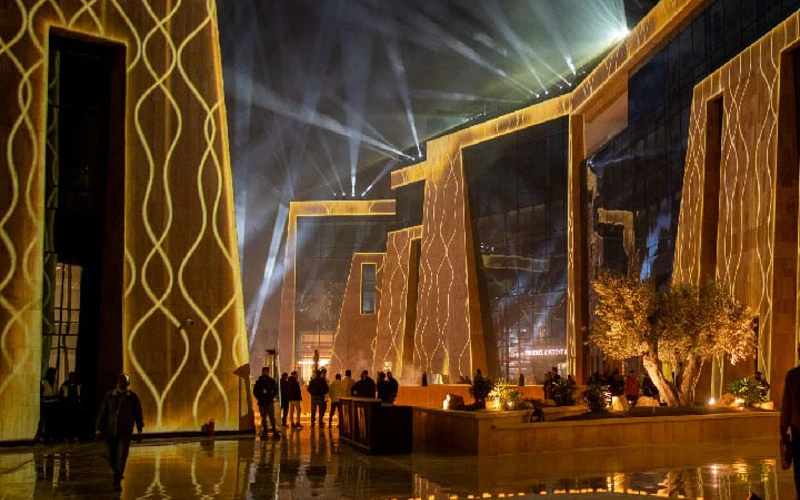
The global business events industry just put a number on itself, and it is a big one. A new study released on 4 August 2026 by the Events Industry Council (EIC), in partnership with Oxford Economics, found that business events generated US$3.1 trillion in total business sales worldwide in 2025, contributed US$1.8 trillion to global GDP, and supported 24.2 million jobs. For Saudi event budget-holders heading into 2027 planning cycles, this is not just an interesting macro statistic — it is ammunition. Boards and finance teams that treat event spend as a discretionary line item now have a credible, independently modelled case for why that spend belongs in the growth column, not the cost-cutting one.
The EIC-Oxford Economics study, based on a global survey of more than 1,600 organisers, venues, DMOs and suppliers plus country-level economic modelling, found that business events brought together 1.65 billion participants across more than 180 countries in 2025, generating US$1.3 trillion in direct spending. Oxford Economics forecasts direct spending will reach US$1.6 trillion by 2028, an average annualised growth rate of 6.7% from 2025 — with direct employment climbing toward 10.4 million jobs.
Asia (US$352.8 billion in direct spending) has overtaken Western Europe (US$328 billion) as the second-largest regional market behind North America (US$487.7 billion) — a regional shift Saudi budget-holders sourcing international speakers, vendors and delegations should keep in view.
The study’s most useful numbers for budget conversations are not the trillion-dollar totals but the return-on-investment data pulled from its organiser and exhibitor survey. Respondents estimated US$11 in incremental revenue for every US$1 invested in attending or exhibiting at business events. Organisations attributed 22% of new customers to in-person event participation, and estimated they would lose 28% of revenue without it. Seventy percent of respondents said relationship-building through face-to-face interaction was the outcome hardest to replace through any other channel.
These figures give Saudi CXOs and finance leads a defensible framework when a budget review asks “why not just cut the conference travel line.” The answer, backed by third-party research rather than internal advocacy, is that in-person business events are functioning as a measurable revenue and customer-acquisition channel — not a soft perk.
Locally, the numbers point the same direction. Saudi Arabia’s MICE market was valued at US$3.22 billion in 2025, is projected to reach US$3.54 billion in 2026, and is forecast to climb to US$5.65 billion by 2031 — a 9.82% compound annual growth rate, according to Mordor Intelligence’s current Saudi Arabia MICE Industry Report. That local growth rate outpaces the 6.7% global average the EIC-Oxford Economics study forecasts through 2028, driven by Vision 2030’s giga-project pipeline adding venues, hotels and interlinked districts built for large-scale conferences and exhibitions.
The practical read for budget-holders: Saudi Arabia’s event infrastructure is being built out faster than the global market is growing, which means local capacity, competition among venues and vendors, and pricing dynamics should all shift meaningfully between now and 2031 — a window CXOs should factor into multi-year venue and production contracts rather than locking in today’s terms indefinitely.
Sources


